
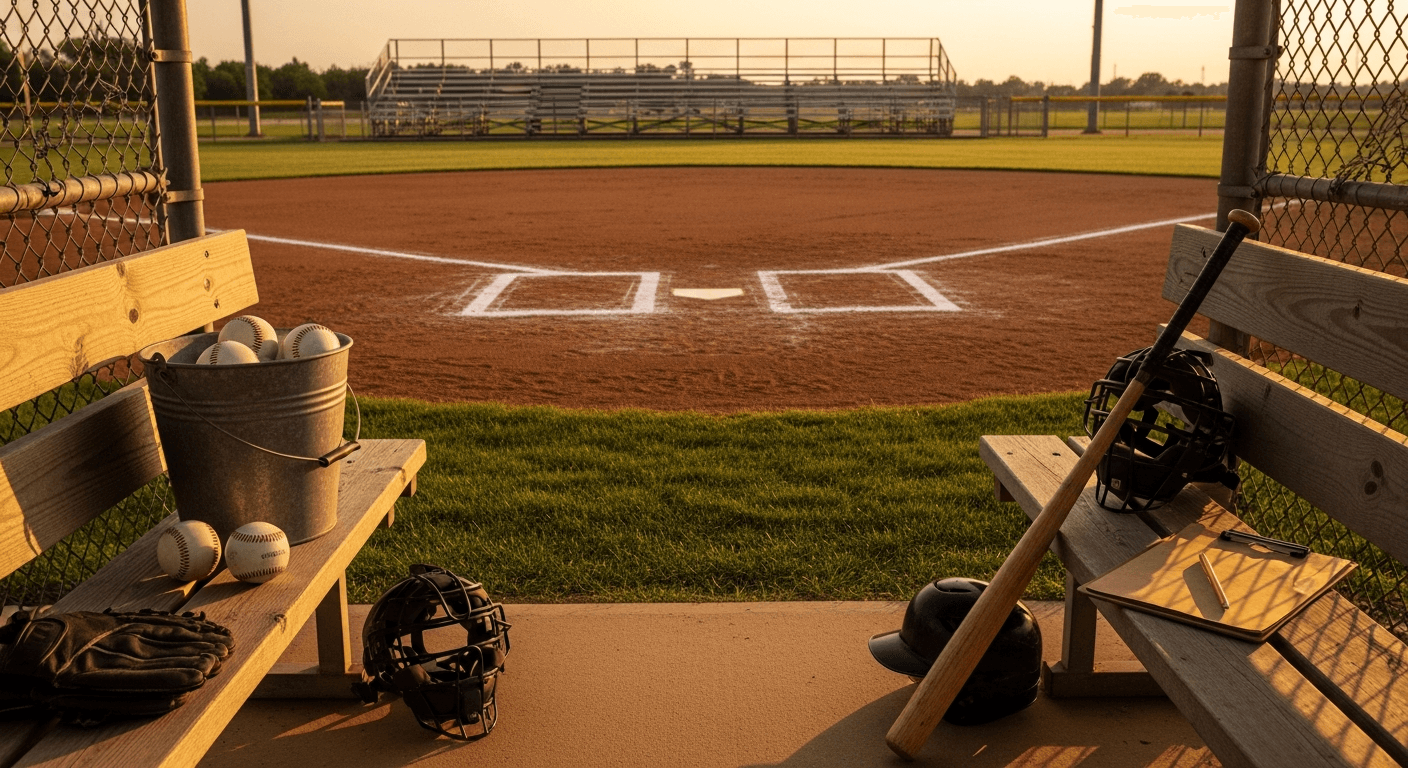
Select Baseball for Youth and Middle School: A Tool, Not an Identity
Select baseball isn’t automatically “good” or “bad.” It’s a tool. And the only honest way to evaluate a tool is to ask two questions: What job is it solving? and What is it costing?
In youth and middle school baseball, the biggest mistake isn’t joining a select team. The biggest mistake is turning select into a belief system: more travel equals more development, more games equals more growth, a better logo equals a better player. That mindset doesn’t just waste time—it quietly teaches kids to chase approval instead of building skills.
Here’s the core idea for ages roughly 9–14: select baseball is most valuable when it solves a specific developmental need (quality reps, better coaching, age-appropriate challenge, a safer structure) without stealing the inputs that actually drive improvement (health, sleep, strength basics, multi-sport movement, joy, confidence, and a stable identity).
If select becomes a kid’s identity, the kid often gets smaller: more anxious, more fragile, more dependent on external validation. If select stays a tool, the kid usually gets bigger: more resilient, more adaptable, more coachable, and more durable.
The practical question for families and coaches isn’t “Is select worth it?” It’s this: Will this help the player get better by next season and still love baseball when the season ends?
What Select Really Changes for Young Players: Calendar, Role, and Feedback
When a player joins select, three things change immediately—whether anyone says it out loud or not: the calendar, the role, and the feedback loop. Those three changes explain most of the “select helped my kid” stories and most of the “he burned out by 13” stories.
The Calendar: More Activity, Less Margin
Select adds games, travel, warm-ups, pregame throwing, adrenaline, and “prove it” intensity. It often subtracts sleep, family downtime, and consistent training habits. Even if a kid is tough, the margin gets thinner.
For youth and middle school athletes, the calendar problem isn’t just physical. It’s emotional and cognitive: school expectations, friend drama, growth spurts, and constant evaluation. A lot of kids don’t struggle because they’re “soft.” They struggle because they’re never truly off.
A coaching lens that matters at 11–14: fatigue isn’t just soreness—fatigue is loss of skill. Throwing accuracy fades. Timing at the plate drifts. Footwork gets lazy. The kid starts “trying harder” and gets worse.
If you want a simple red flag: when a player’s effort keeps going up but their execution keeps going down, you’re usually looking at fatigue, not attitude.
The Role: Labels Can Focus or Shrink a Kid
Select teams often label quickly: “He’s a shortstop.” “She’s a pitcher.” “He’s a leadoff.” Labels can help a player feel secure, but they can also trap a kid in a small box before their body and skills have had time to develop.
In middle school, bodies change fast. A player who is “the shortstop” at 11 might be an outfielder at 14. A kid who is “pitcher-only” at 12 might be your best hitter at 13. Select can accelerate clarity—or accelerate premature specialization.
A strong coaching principle at these ages: roles should be temporary and earned, not permanent and assigned. Great programs give kids a role for today without stealing tomorrow.
The Feedback Loop: More Metrics, More Noise
Select environments can amplify external feedback: radar guns, exit velocity, social media clips, rankings, “guest player” culture, and constant comparison. Metrics can be useful, but they also create a dangerous illusion for young athletes: that what’s easy to measure is what matters most.
Youth games are won by basics: throwing strikes, catching routine balls, smart base running, backing up, communication, and emotional control after mistakes. Those don’t show up in a highlight reel, but they decide innings.
Coaching principle: the more external the feedback, the more you must coach internal anchors—routine, effort standards, and a consistent definition of “good baseball” that doesn’t change with the audience.
When Select Is Worth It for Youth (and When It Isn’t)
Most select debates are too general. The better approach is to identify the specific problem select is supposed to solve. If you can’t name the problem, you’re probably buying a feeling, not a plan.
Good Reasons Select Can Help Young Players
- Quality reps are truly lacking. Some players don’t get enough meaningful innings, at-bats, or defensive chances in their local setting. Select can provide more structured reps—if the volume is age-appropriate.
- Coaching quality and practice structure are better. The best select teams run practices with clear skill themes, stations, and accountability. That can accelerate learning more than any weekend tournament.
- The competition is appropriate and forces adaptation. Facing slightly better players can expose gaps and speed up learning—if the athlete has recovery time and supportive coaching.
- The program teaches fundamentals correctly. Throwing mechanics, receiving, footwork, and baserunning habits built at 10–13 can last a lifetime. Select is useful when it teaches the basics well.
- The environment is positive and stable. A healthy team culture—where mistakes are coached, not punished—can be a major developmental advantage for a young athlete.
Bad Reasons Select Becomes a Trap for Youth
- Games replace training. Games reveal your level; they rarely change it. If the plan is “play more tournaments,” development often stalls while wear-and-tear climbs.
- There is no off-ramp. Year-round throwing without intentional downshifts is a common pathway to arm pain, loss of accuracy, and burnout—especially during growth spurts.
- Status becomes the point. When the logo is the reward, kids start protecting the image instead of building the habits that actually improve performance.
- Every weekend becomes a showcase. “Look good” baseball creates bad habits: swinging too big, overthrowing, rushing plays, and skipping fundamentals because they aren’t flashy.
- It narrows identity too early. “Baseball only” can work for a small subset at the right time, but for many 9–14 year-olds it reduces overall athleticism and increases burnout risk.
A rule that holds up in youth sports: If the plan is “more,” the outcome is often “tired.” If the plan is “better,” the outcome is often “better.”
Two Common Patterns That Derail Youth and Middle School Players
You don’t need horror stories to understand what goes wrong. You just need to recognize the patterns that repeat—on good teams and bad ones—when adults chase outcomes faster than kids can develop.
Pattern One: The Overloaded Thrower
This is the player who is “doing everything right” on paper: team practices, weekend tournaments, an extra lesson “to stay sharp,” plus backyard throwing because they feel behind. They aren’t lazy. They’re committed. That’s the problem.
What shows up first usually isn’t pain. It’s loss of feel: accuracy disappears, the ball slips early, the kid starts pushing the ball, and they begin aiming instead of throwing. Coaches often respond by adding more cues or more intensity. The player responds by trying harder. The spiral continues.
The youth coaching insight: this is often not a “mechanics issue.” It’s an accumulated fatigue issue paired with a kid who doesn’t know how to downshift.
What to do instead:
- Track throws, not just innings. A “light” weekend can still be heavy when you add warm-ups, between-inning throws, and long toss.
- Build a weekly rhythm. Two higher-intent throwing days, a couple lower-intent days, and at least one true off day can protect arms and improve accuracy.
- Use accuracy goals, not velocity goals. At 9–14, command and clean movement patterns beat chasing radar numbers.
Pattern Two: The Early Specialist Who Stops Moving Well
This is the kid who becomes “a pitcher” or “a shortstop” so early that they stop developing as an overall athlete. They play fewer sports, do less sprinting and jumping, and spend more time in repetitive baseball patterns. The result is often a player who looks advanced at 11, then gets passed at 14 by kids who kept building athleticism.
Middle school is a movement window. If you miss it, you can still improve later—but it’s harder. The goal isn’t to avoid baseball. The goal is to avoid only baseball.
What to do instead:
- Keep at least one “athlete day” per week. Sprint, jump, climb, play basketball, wrestle, swim—anything that builds coordination and resilience.
- Rotate defensive positions. Let kids learn infield and outfield reads. Let catchers play another spot sometimes. Variety builds baseball IQ.
- Teach movement skills on purpose. Skipping, shuffling, landing, decelerating, and changing direction are injury-prevention and performance tools.
A Coach’s Development Priority List for Ages 9–14
If you want select baseball to be a tool (not an identity), you need a clear priority list. Without it, families default to what’s loudest: schedules, trophies, and “playing up.”
Priority One: Healthy Throwing and Arm-Care Habits
You don’t need a complicated arm-care system for youth baseball. You need consistency, good movement, and boundaries.
- Teach a repeatable warm-up. Jog, skip, shuffle, shoulder circles, band work (light), then progressive catch.
- Separate “practice intent” from “game intent.” Not every throw needs to be max effort.
- Protect recovery. Sleep, hydration, and at least one true off day per week matter more than one extra bullpen.
If your team doesn’t have a throwing plan, your best athletes will create their own—and it usually becomes “more” instead of “smart.”
Priority Two: Fundamentals Under Speed (Not Just in Lines)
Young players don’t fail because they don’t know what to do. They fail because they can’t do it fast enough, often enough, under pressure. Your practices should build fundamentals at realistic pace.
- Short reps, many reps. Avoid long lines. Use stations. Keep kids moving.
- Game-like timing. Add a clock, a score, or a consequence to make focus real.
- Teach “next play” skills. Mistakes are coming. Train the response.
Priority Three: Love of the Game and Emotional Safety
You don’t have to choose between standards and fun. Great youth coaching is both: clear expectations and a safe place to fail while learning.
A simple test: if kids are afraid to make an error, they will play tight, stop taking chances, and eventually stop improving.
Practice Plans: Drills That Fit Select or Rec Ball
Below are practical drills you can plug into youth and middle school practices. They build the skills that actually win games at these ages: throwing/catching, footwork, decision-making, and base running.
Drill 1: Throwing Accuracy Ladder (10 Minutes)
Purpose: Build consistent catch play, better aim, and calmer throwing under light pressure.
Setup: Partners at 45–60 feet (adjust by age). Each pair needs a ball.
- Round 1: 10 perfect catches in a row (catchable throws only). If the ball is dropped or uncatchable, restart at 0.
- Round 2: Same goal, but players must use a quick shuffle before throwing.
- Round 3: Same goal, but add a verbal cue: thrower calls “ball” and receiver calls “here.”
Coaching cues: “Quiet head, strong front side, throw through the partner.” Praise catchable throws more than hard throws.
Drill 2: Infield Decision Box (12 Minutes)
Purpose: Teach infielders to read hops, move their feet, and make quick decisions.
Setup: Four cones make a small box (about 8–10 yards wide). Coach rolls or hits short fungos. One fielder at a time.
- Coach sends a ground ball. Player must field inside the box with active feet.
- Player makes one of three throws based on a coach call after contact: “One!” (1B), “Two!” (2B), “Hold!” (no throw, secure and reset).
- Rotate quickly. Keep reps short and sharp.
Progression: Add a runner (or a timer) so the fielder feels realistic urgency.
Drill 3: Outfield First-Step and Angle Series (12 Minutes)
Purpose: Improve reads, first step, and confidence tracking the ball.
Setup: Two lines in the outfield. Coach hits or throws high balls.
- Phase 1 (no ball): Coach points left/right/back; players take one explosive first step and freeze.
- Phase 2 (with ball): Coach sends balls at 60–70% difficulty so players can succeed and learn angles.
- Phase 3: Add a “catch and crow hop throw” to a target cone.
Coaching cues: “First step is a decision.” “Turn and run, don’t drift.” Reward good routes, not just catches.
Drill 4: Baserunning Reads and Reactions (10 Minutes)
Purpose: Build smart aggression and reduce outs on the bases.
Setup: Players at 1B and 2B. Coach with fungo or throws to simulate hits.
- Coach calls situation: “One out,” “Two outs,” “Tag on fly,” etc.
- Coach hits/rolls/throws a ball to simulate a single, gap shot, or fly ball.
- Runners must make the correct decision and communicate (point, talk, commit).
Key teaching point: Youth runners don’t need perfect leads. They need clear rules and fast decisions.
How to Build a Season Plan That Prevents Burnout
The healthiest youth select families and coaches do something simple: they plan the year like a rhythm, not a grind. If there’s no rhythm, “baseball” quietly becomes “always.”
The 80/20 Rule for Youth Development
A helpful guideline: 80% development, 20% display. Development is practice, movement training, learning, and recovery. Display is tournaments and showcases. When that ratio flips, kids may look busy, but they rarely get better.
Create Downshifts, Not Just Days Off
You don’t need a three-month break for every player. You do need planned downshifts where intensity and volume drop.
- Weekly: At least one true off day (no throwing, no hitting).
- Monthly: One lighter week where practices are shorter and throwing volume decreases.
- Yearly: A period where baseball is reduced and another sport or general athletic training increases.
Parent and Coach Language That Keeps Select as a Tool
Kids build identity from adult language. If we talk like baseball is life-or-death at 12, they will play like it, too.
Swap Status Phrases for Process Phrases
- Instead of: “You have to dominate this weekend.” Try: “Let’s compete with good body language and make routine plays.”
- Instead of: “This team is better than your other team.” Try: “This is a different environment to learn in.”
- Instead of: “You need to throw harder.” Try: “Let’s throw with better direction and hit the target.”
Define Success for the Car Ride Home
The car ride home is where many kids decide whether they love the sport or fear it. A simple structure helps:
- Ask one question: “What did you learn today?”
- Name one controllable: “I loved your hustle on defense.”
- End with safety: “I’m proud of you no matter what.”
The Bottom Line: Select Should Build the Kid, Not Consume the Kid
Select baseball can be a powerful tool for youth and middle school players when it provides better coaching, better practice structure, and the right level of challenge. It becomes a problem when it replaces training, crowds out recovery, and turns a child’s identity into a uniform.
If you’re a coach, your job is to protect development from the noise: teach fundamentals, manage workload, rotate roles, and keep the game fun enough that kids want to come back tomorrow.
If you’re a parent, your job is to protect the kid: sleep, school, downtime, and emotional safety. The goal at 9–14 isn’t to “win the baseball childhood.” The goal is to build a player who is healthy, confident, and still improving when the field finally gets big and the game finally gets hard.
Tags
Related Articles
Take Your Coaching to the Next Level
Practice Plan helps coaches create, organize, and share professional practice plans — all in one place, built for coaches.
Free to start • Available on iOS & Web
For Leagues & Associations
Give your coaches a free tool — at no cost to you.
Partner with Practice Plan and your coaches get a 14-day free trial. You just forward one email. No budget, no contracts.
Get Coaching Articles in Your Inbox
Subscribe to receive new articles. Choose your sports to get personalized content.
No spam, unsubscribe anytime.