
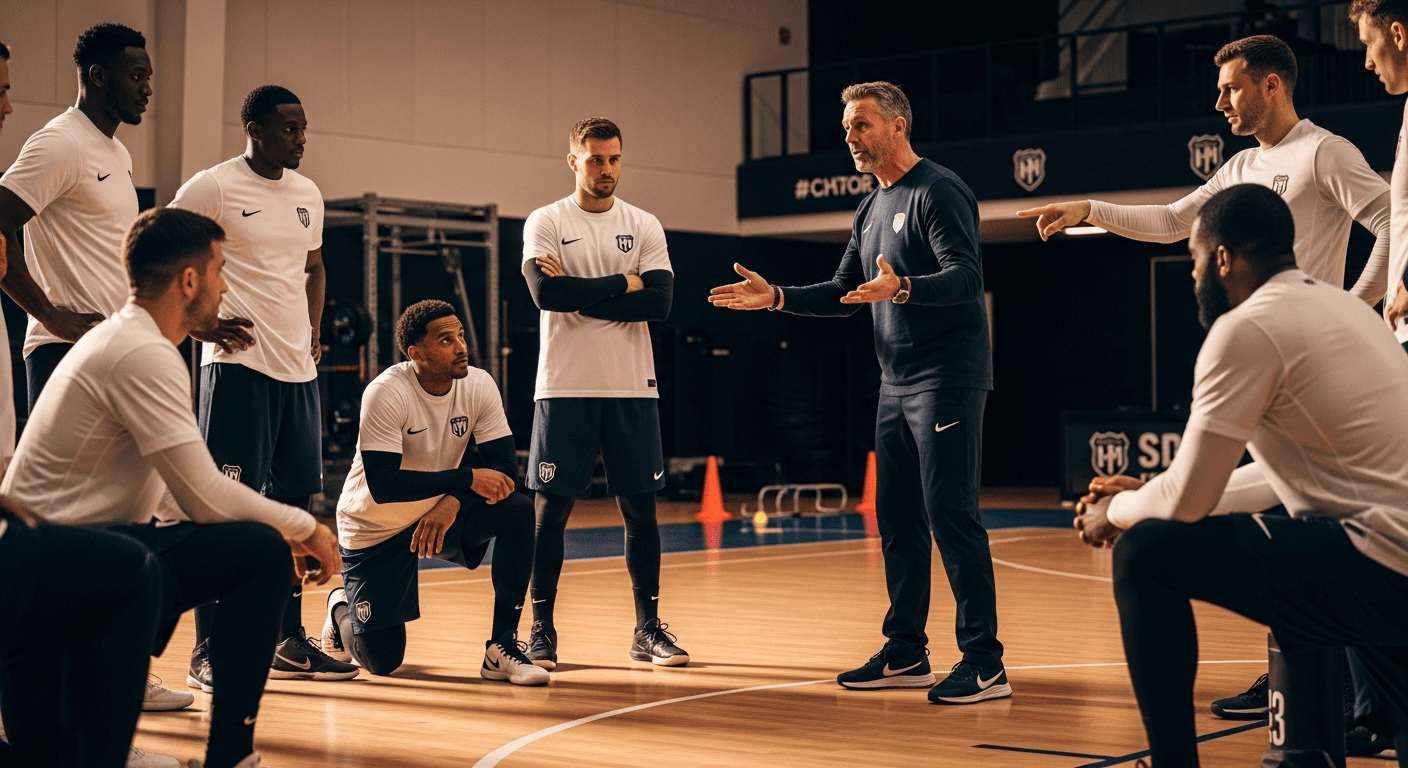
The Core Idea
Building team chemistry and cohesion is a multifaceted process that involves creating an environment where athletes feel connected, motivated, and aligned towards common goals. This not only enhances performance but also cultivates a positive team culture. At its core, team chemistry is about mutual respect, shared experiences, and effective communication. Cohesion, on the other hand, is the binding force that keeps a team working together seamlessly even under pressure.
Why This Wins in Sports
Strong team chemistry and cohesion translate directly into more consistent and higher-level performance. Here’s why:
- Trust and Confidence: Athletes who trust their teammates are more likely to take calculated risks and perform at their best.
- Aligned Goals: Teams with clear, shared objectives are more focused and driven, reducing distractions.
- Resilience: Cohesive teams are better equipped to handle setbacks, maintaining morale and determination.
- Enhanced Communication: Effective communication allows for real-time problem solving, crucial in dynamic sports environments.
Ultimately, teams with strong chemistry are more adaptable, disciplined, and unified, often outperforming those with superior individual talent but poor cohesion.
The Mechanics
Building team chemistry and cohesion requires deliberate and ongoing effort. Here are the mechanics of fostering these elements:
- Establish Clear Roles: Define each athlete’s role within the team to prevent overlap and confusion.
- Promote Open Communication: Create a safe space for athletes to express ideas, concerns, and feedback without fear of judgment.
- Develop Shared Goals: Involve athletes in setting team goals to increase buy-in and commitment.
- Foster Team Activities: Incorporate team-building exercises that emphasize trust and cooperation.
- Encourage Leadership: Identify and nurture leaders within the team who can reinforce the team's culture and values.
The Decision Rules
Decision rules help athletes make quick, effective choices that align with team chemistry and cohesion:
- If unsure of a play, then communicate: Encourage athletes to voice uncertainties to prevent miscommunication.
- If a teammate makes a mistake, then support and refocus: Promote a culture of upliftment rather than blame.
- If tensions arise, then address them immediately: Encourage resolving conflicts promptly to maintain harmony.
- If a goal is achieved, then celebrate as a team: Reinforce collective accomplishment to strengthen bonds.
Common Mistakes and Exact Fixes
- Mistake: Ignoring role conflicts. Fix: "Clarify your role" by regularly reviewing and defining roles with each athlete.
- Mistake: Limited communication. Fix: "Speak up, Listen up" by implementing regular team meetings and feedback sessions.
- Mistake: Focusing only on star players. Fix: "Value everyone" by recognizing contributions from all team members, not just the stars.
- Mistake: Neglecting team-building. Fix: "Build together" with scheduled team-building activities that encourage interaction.
- Mistake: Overloading athletes with information. Fix: "Simplify and Focus" by breaking down information into digestible parts.
- Mistake: Not addressing conflicts. Fix: "Resolve, don't dissolve" by mediating conflicts promptly and effectively.
- Mistake: Inconsistent messaging. Fix: "Consistent message" by ensuring all coaches and leaders are aligned in their communication.
- Mistake: Lack of adaptability. Fix: "Adapt and Conquer" by preparing the team with various scenarios and responses.
Teaching Progression
The progression for teaching team chemistry and cohesion involves three stages:
- Beginner: Focus on basic communication skills and understanding roles. Move to the next stage when athletes can consistently articulate team goals and their roles.
- Intermediate: Develop trust through team-building exercises and collaborative drills. Progress once athletes demonstrate trust by relying on one another in challenging situations.
- Advanced: Instill leadership and conflict resolution skills. Advance when athletes start taking initiative in leading team discussions and resolving conflicts independently.
Drill Menu
-
Trust Fall Exercise
- Purpose: Build trust among team members.
- Setup: Partner athletes and have one fall back into the arms of the other.
- Key Constraint: Ensure clear communication before each fall.
- Success Metric: Athletes comfortably execute falls without hesitation.
- Scale: Increase distance between partners to make it more challenging.
-
Role-Playing Scenarios
- Purpose: Enhance communication and conflict resolution.
- Setup: Create scenarios that require athletes to discuss and solve problems.
- Key Constraint: Each athlete must contribute to the solution.
- Success Metric: Effective group solutions with minimal coach intervention.
- Scale: Increase complexity of scenarios.
-
Team Huddle Discussions
- Purpose: Foster open communication.
- Setup: Regular team huddles where athletes discuss game plans.
- Key Constraint: Rotate leadership roles for each huddle.
- Success Metric: Clear, concise, and inclusive discussions.
- Scale: Reduce coach input over time.
-
Shared Goals Workshop
- Purpose: Develop shared objectives.
- Setup: Conduct workshops to brainstorm and agree on team goals.
- Key Constraint: Goals must be SMART (Specific, Measurable, Achievable, Relevant, Time-bound).
- Success Metric: Unified team agreement and understanding of goals.
- Scale: Review and update goals periodically.
-
Leadership Rotation Drill
- Purpose: Develop leadership skills.
- Setup: Assign different athletes to lead practice sessions.
- Key Constraint: Leaders must plan and execute drills.
- Success Metric: Effective leadership and engagement from peers.
- Scale: Increase complexity of drills led by athletes.
Game Transfer
Measuring improvement in team chemistry and cohesion during real competition involves observing specific behaviors and outcomes:
- Communication: Look for verbal and non-verbal communication during plays.
- Supportive Behavior: Athletes visibly supporting each other, especially after mistakes.
- Goal Alignment: Consistent execution of plays that align with team strategy.
- Resilience: The team’s ability to bounce back from setbacks during a game.
- Leadership Emergence: Athletes taking initiative to lead or motivate the team without prompting.
Improvement can also be quantified by tracking metrics such as reduced unforced errors, increased successful plays, or higher team morale as noted by coaches and players.
Coach Cheatsheet
- Shoutable Coaching Cues: "Trust the team!", "One voice!", "Lead the charge!", "Clear roles!", "Back each other!", "Solve together!", "Unified goal!", "Celebrate wins!", "Resolve quickly!", "Adapt and succeed!"
- Focus Areas: Trust-building, communication, role clarity, leadership development, conflict resolution.
- Feedback Approach: Provide constructive, immediate feedback. Highlight positive examples of team chemistry.
- Regular Check-ins: Schedule consistent review sessions to discuss progress and areas for improvement.
By embedding these practices into your coaching routine, you can develop a team that is not just a collection of athletes, but a cohesive unit that performs consistently and enjoys the journey of growth and competition together.
Tags
Sources & References
- Team Chemistry & Cohesion Strategies in Sports Coaching
Discover strategies for fostering team chemistry and cohesion in sports coaching. Learn to build trust, leadership, shared goals, and team culture.
- 5 Tips for Coaches to Build Team Chemistry and Cohesion
5 Tips for Coaches to Build Team Chemistry and Cohesion · Set appropriate, realistic goals. · Generate enthusiasm. · Be consistent. · Praise often.
- Tips on Building Team Chemistry - OPA Winning Teams
Promote Positive & Open Communication. A highly cohesive team will create a safe atmosphere where each player can talk openly and honestly with
- Team Chemistry: 30 Elements for Coaches to Foster Cohesion ...
30 elements for coaches to foster cohesion, strengthen communication skills, and create a healthy sport culture.
- Building Team Chemistry Throughout the Season - Headstrong Athlete
Effective communication is the foundation of team chemistry. As a coach, it is crucial to establish open lines of communication among players and yourself.
Related Articles
Take Your Coaching to the Next Level
Practice Plan helps coaches create, organize, and share professional practice plans — all in one place, built for coaches.
Free to start • Available on iOS & Web
For Leagues & Associations
Give your coaches a free tool — at no cost to you.
Partner with Practice Plan and your coaches get a 14-day free trial. You just forward one email. No budget, no contracts.
Get Coaching Articles in Your Inbox
Subscribe to receive new articles. Choose your sports to get personalized content.
No spam, unsubscribe anytime.