
The Core Idea
Ethical swimming coaching is the daily practice of making performance decisions that protect athlete welfare, preserve fairness, and build long-term athlete development—especially when the short-term incentives (winning dual meets, qualifying cuts, relay points) push in the opposite direction.
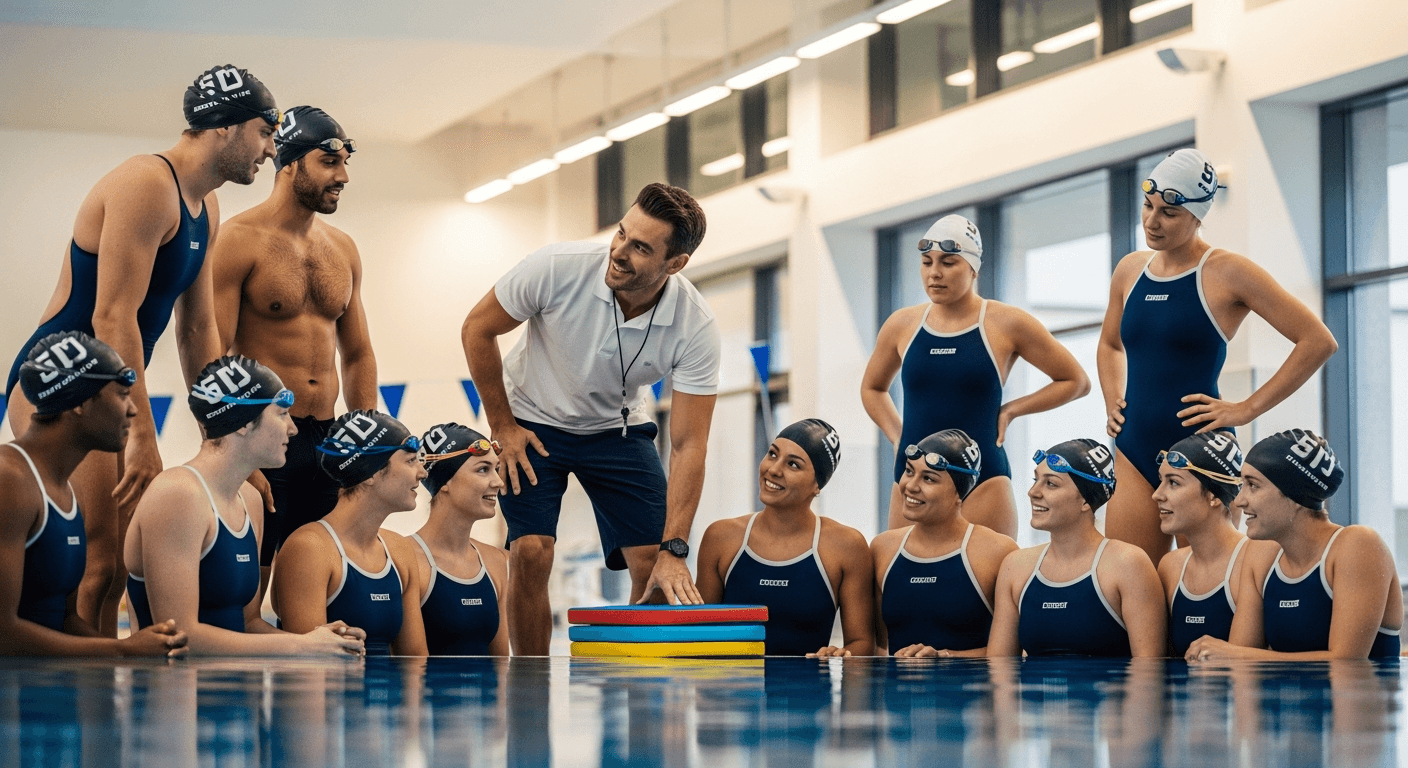
In a mid-season high school (HS) environment with 12–15 athletes in a pool, ethics isn’t a poster on the wall. It shows up in concrete moments: how you run sets when someone is overly fatigued, how you talk about weight and bodies in a sport obsessed with times and suits, who you allow on deck, how you handle taper pressure, and how you interact with officials and other teams at meets.
This deep dive is built like a coaching clinic manual: why + what + how + how to teach + how to diagnose + how to fix. The goal is to help an intermediate swim coach make ethical choices that are also practical, teachable, and measurable in real training and competition.
Why This Wins in swimming
Ethics “wins” in swimming because the sport’s structure amplifies coaching power and athlete vulnerability. You control lane assignments, set volume/intensity, access to meets, relay slots, and often the social status of athletes on a small roster. In HS mid-season, the pressure to chase times can lead to ethical drift: training through injury, unhealthy weight talk, favoritism in relays, blurred boundaries on deck, or “win at all costs” behavior with officials.
Ethical coaching also improves performance because it increases trust, which increases effort and honesty. Athletes report pain sooner, admit when they’re overwhelmed, and commit to training because they believe the plan serves them—not just the scoreboard. That directly supports consistent training, better taper outcomes, and fewer missed weeks due to preventable injury or burnout.
Ethics is also a competitive advantage at meets. Programs with a clear code (similar to many club and federation codes of conduct) reduce deck chaos: athletes know who can approach officials, how to handle DQs, and how to treat other teams. That steadiness matters when a relay exchange is tight, a false start happens, or a swimmer is rattled by a missed turn.
The Mechanics
Think of ethical swimming coaching as a system with four “mechanics” you can run every day in practice and at meets:
- Safety-first load decisions: You adjust volume/intensity based on observable fatigue, pain reports, and technique breakdown—especially mid-season when cumulative load is high.
- Fair and transparent selection: Relay spots, event entries, and lane hierarchies follow pre-stated criteria (times, attendance, role needs), not mood or favoritism.
- Boundaries and professionalism on deck: You maintain appropriate physical and emotional boundaries, control deck access, and communicate with athletes in ways that protect dignity.
- Integrity in competition: You respect officials, model rules knowledge, and teach athletes to respond ethically to DQs, close calls, and opponent behavior.
For an intermediate HS coach, the key is turning these into repeatable behaviors that athletes can run in real swimming tasks (starts, turns, pacing, relays) rather than abstract “be respectful” messaging.
The Decision Rules
These are simple if/then rules HS swimmers can apply in live training and meets (mid-season) in a pool environment. Teach them on deck, then reinforce them during real sets.
- If you feel sharp pain (not normal fatigue) during a set, then stop at the wall, signal the coach, and switch to the agreed “safe option” (kick w/ board, easy swim, or drill) until cleared.
- If your stroke falls apart for 25+ yards (crossing over, dropped elbow, scissor kick), then drop intensity one level and fix one technical cue before you chase the interval.
- If you miss an interval twice in a row on a main set, then move to the next slower lane or take a modified send-off—no hiding or “sneaking” extra rest.
- If you’re asked to do extra yards after practice as punishment, then you ask, “Is this training or discipline?” and the coach must reframe it into a safe, purposeful set or choose a non-physical consequence.
- If you’re unsure whether you false started or missed the wall, then you tell the coach immediately—integrity first, even if it costs a time.
- If an official makes a call you dislike at a meet, then you stay silent and focused; only the coach approaches officials (HS team + meet environment standard).
- If you see a teammate being mocked about body shape, suit fit, or weight, then you interrupt with a neutral reset (“We talk times and skills”) and tell the coach after practice.
- If you’re in a relay and you’re not ready behind the blocks, then you step back and reset rather than rushing into an unsafe exchange.
- If you’re sick, dizzy, or unusually short of breath mid-set, then you get out, hydrate, and report it—no “toughing it out” to impress anyone.
- If you’re doing underwater work and you feel disoriented, then you surface immediately—no hypoxic “games” or breath-holding contests.
- If you’re injured but want to race anyway, then you and the coach use the “risk check” (pain scale, function test, medical guidance) before deciding.
- If you’re upset after a bad swim, then you do a 30-second reset: breathe, check one controllable skill (start, turn, tempo), then rejoin the team—no deck meltdowns or blaming others.
Common Mistakes and Exact Fixes
These are common ethical breakdowns in HS swimming mid-season, with exact fixes you can implement immediately with a 12–15 athlete roster in a pool setting.
- Mistake: Training through pain because “mid-season is grind time.” Fix: Use a visible “traffic light” system on the whiteboard: green (normal), yellow (modify), red (stop/medical). Require athletes to report color before main set.
- Mistake: Using extra laps as punishment for missing practice or being late. Fix: Separate discipline from training: consequences are non-physical (team service, meet setup help). Training sets must have a physiological purpose (aerobic, threshold, speed).
- Mistake: Public weigh-ins, body comments, or “leaner is faster” talk. Fix: Ban body commentary on deck. Replace with performance language: “distance per stroke,” “tempo,” “turn speed,” “underwater quality.” If nutrition is needed, refer to qualified support.
- Mistake: Favoritism in lanes/relays without criteria. Fix: Post relay selection rules: last 2–3 meet times, practice attendance, relay takeoff consistency, and team role needs. Review weekly mid-season.
- Mistake: One-on-one private messaging with athletes at night about performance. Fix: Use team channels or copy a parent/administrator per policy; keep messages logistical and time-bounded. Save performance conversations for pool deck or scheduled meetings.
- Mistake: Ignoring mental strain during taper or high-pressure meets. Fix: Run a 2-minute “taper check” at warm-up: sleep, stress, soreness, confidence (1–5). Adjust expectations and cueing accordingly.
- Mistake: Allowing unsafe underwater breath-control challenges. Fix: Explicit rule: no hypoxic games. Underwaters are coached with limits (distance/time), partner observation, and immediate surface permission.
- Mistake: Blaming officials or encouraging athletes to argue calls. Fix: Teach “officials are part of the sport.” Only coach speaks to officials; athletes focus on next controllable skill.
- Mistake: Sharing athlete times/health info casually with other parents or swimmers. Fix: Treat health and personal details as confidential. Times are public; injuries, mental health, and family issues are not.
- Mistake: “Motivational” sarcasm that humiliates a swimmer after a bad rep. Fix: Use private correction at the lane end: one fact + one fix + one encouragement tied to effort (“Your breakout was late; next rep, eyes down at 5m; you’re working hard.”).
Teaching Progression
This progression shows how to teach ethical behavior through real swimming tasks, moving from basic safety and respect to athlete-led integrity and decision-making. It’s designed for an intermediate coach, HS athletes, mid-season training, 12–15 swimmers, pool environment.
Stage 1 (Beginner): “Safety and Standards on Deck”
- Teach non-negotiables during warm-up and skill work: safe entries, no breath-holding contests, clear reporting of pain/sickness.
- Use simple language: “Report pain early,” “Technique before interval.”
- Rehearse meet etiquette in practice: who talks to officials, how to respond to DQs.
Stage 2 (Intermediate): “Fairness and Accountability in Sets”
- Build transparency into lane assignments and send-offs. Athletes learn to self-seed honestly and move lanes when needed.
- Teach athletes to request modifications appropriately (yellow light) without stigma.
- Introduce relay ethics: safe takeoffs, honest exchange marks, team-first behavior.
Stage 3 (Advanced): “Athlete-Led Integrity Under Pressure”
- Swimmers run parts of practice with ethical guardrails: they choose modifications, manage rest honestly, and report issues early.
- Simulate meet stress: close races, false-start scenarios, DQ discussions—athletes practice calm, respectful responses.
- Develop leaders who protect team culture (interrupt body talk, support anxious teammates, model respect for officials).
Drill Menu
All drills are sport-integrated (real swimming skills) and include at least two context items (HS + mid-season; team size + pool environment; etc.).
-
1) “Traffic Light Main Set” (HS + mid-season, pool)
Before a threshold set (e.g., 10x100), each swimmer shows green/yellow/red. Yellow swimmers pre-select a modification (shorter distance, slower send-off, drill-swim). Coach tracks who modifies and why—normalizing ethical self-reporting without punishment.
-
2) “Integrity Seeding Ladders” (team size 12–15 + pool)
Swimmers self-seed into 3 lanes based on recent 100 free time. Run 6x50 on a tight interval. Rule: if you miss twice, you move down; if you consistently make it with quality, you move up. Coach reinforces honesty and removes stigma from lane changes.
-
3) “DQ-to-Do-Over Turns” (HS + pool)
During IM turn work, intentionally call “soft DQs” (early breast kick, missed back-to-breast touch) in practice. Swimmer must immediately redo the turn correctly at easy speed. Teaches that rules are learnable skills, not shame events.
-
4) “Relay Takeoff Trust Reps” (mid-season + team size 12–15)
Run 4x25 relay exchanges with assigned roles (starter, second, third, anchor). Use consistent marks and require athletes to call out “not ready” if they aren’t set. Score points for safe, legal exchanges and honest resets—not just fastest time.
-
5) “Underwater Quality Caps” (HS + pool)
Swimmers do 8x15m underwater dolphin off the wall with a strict max distance/time and immediate surface permission. Partner watches. Coach scores “quality” (streamline + kick rhythm) instead of “who can go farthest,” preventing unsafe hypoxic competition.
-
6) “Private Feedback Finish” (mid-season + HS)
During a broken 200 (e.g., 4x50), coach gives corrections only at the wall in a low voice: one technical fix per rep. This drill trains the coach’s ethical communication habit—correct without public embarrassment—while athletes execute race-pace skills.
-
7) “Meet Etiquette Simulation Set” (HS + mid-season)
Run a mock meet: warm-up lanes, check-in, heats, and a staged “official’s call” moment. Athletes practice: only coach addresses officials; swimmers reset and focus on next race skill (start, breakout, finish).
Coach Scripts
Use these exact words on deck (HS, mid-season) to set ethical standards without turning it into a lecture.
-
Script 1: Pain and modification
“Team, mid-season training only works if we can train tomorrow. If you have sharp pain, you stop at the wall and tell me. That’s not quitting—that’s protecting your season. We’ll switch you to a safe option and keep you in the work.”
-
Script 2: Relay selection transparency
“Relays matter, and fairness matters. Relay spots this week come from: last two meet times, attendance, and takeoff consistency. If you want a lane or relay change, ask me after practice and we’ll look at the data together.”
-
Script 3: Officials and integrity
“At meets, you never argue with officials. If there’s a question, I handle it. Your job is to learn from the call and race the next thing. We win with skill and respect—not excuses.”
Team System / Routine
The 4-Minute Ethical Warm-Up Routine (repeat daily mid-season; fits 12–15 HS swimmers in a pool)
- 30 seconds: Deck check — “Any red lights today?” Coach visually scans posture, mood, and energy.
- 60 seconds: Safety + boundary reminder — One rotating standard: underwaters rule, deck access, appropriate language, meet etiquette.
- 60 seconds: Fairness preview — Post lane assignments and the “move-up/move-down” rule for the day’s main set.
- 60 seconds: Athlete voice — Two athletes share: (1) one team value they saw yesterday (e.g., honest lane move), (2) one skill focus for today.
- 30 seconds: Commit — “Green/yellow/red” quick check before entering.
This routine turns ethics into a habit loop: check welfare, state standards, make fairness visible, give athletes a voice, then swim.
Game Transfer and Measurement
Ethics can feel “soft” unless you measure behaviors that transfer to meets and season sustainability. In HS mid-season, track these indicators weekly:
- Modification compliance rate: How often swimmers correctly report yellow/red and follow the safe option (goal: high compliance, not “zero modifications”).
- Technique-under-fatigue score: During threshold sets, count how many reps maintain a defined standard (e.g., legal breast pullout, consistent stroke count range). Ethical load management should improve this.
- Relay exchange legality + readiness: Number of legal exchanges and number of athlete-called resets (“not ready”). A healthy culture increases safe resets early, then reduces them as skill improves.
- Meet conduct notes: One line after each meet: any arguing with officials? any teammate disrespect? any body talk? Track trends like you track times.
- Injury/illness interruption days: Not to blame athletes—use it to evaluate whether training decisions are sustainable.
- Athlete trust check (anonymous, 3 questions monthly): “I can report pain without punishment.” “Relay selection feels fair.” “I feel respected on deck.” Use 1–5 ratings.
Transfer is visible when swimmers self-advocate early, maintain technique longer in races, handle DQs calmly, and stay available for training through the end of the season.
Coach Cheatsheet
Shoutable Coaching Cues (2–6 words each; use during real sets)
- “Safety beats hero reps.”
- “Green, yellow, or red?”
- “Technique before the interval.”
- “Honest lane, honest effort.”
- “Report pain at the wall.”
- “No hypoxic games. Ever.”
- “Respect officials—eyes forward.”
- “Redo it, make it legal.”
- “Quiet correction, strong swimming.”
- “Data decides relays.”
- “Protect tomorrow’s practice.”
- “Team-first on relays.”
Quick ethical checklist (mid-season HS)
- Is today’s load adjustable without shame?
- Are lane/relay decisions transparent and documented?
- Am I correcting privately when possible?
- Have I clearly banned unsafe underwater behavior?
- Do athletes know meet-official protocol?
- Am I protecting athlete dignity (no body talk, no humiliation)?
Bottom line: Ethical coaching in swimming is not separate from performance coaching. It is performance coaching done with standards that protect athletes, preserve fairness, and build a team culture that survives pressure—mid-season and beyond.
Tags
Sources & References
- The Importance Of Ethics In Coaching in 2026
Coaching ethics and professional conduct are of the utmost importance for coaches to set high standards of practice for their clients.
- Code of Ethics - CELTIC WAVES SWIMMING CLUB
Strive to make every team activity serve as a lessons for life. · Respect the integrity of swim officials · Only coaches may approach meet officials for
- [PDF] Ethical Coaching: A Character Backdrop and True Success
• 22 | Volume 2011 — Issue 09 | ASCA Newsletter Thomas Reynolds Lamar: Swim coach was mentor both in and out of pool B y J o s e p h F r e e m a n , O r l a n d o S e n t i n e l The work ethic that w
- Elite swimmers' and coaches' understanding and psychological ...
Consideration of all organizational levels (athletes, coaches, management) is crucial for effective psychological support during taper. Education on taper
- American Development Model - USA Swimming
The athlete understands the importance of muscular flexibility in swimming performance. The athlete understands the relationship between distance per stroke, stroke rate, and swimming speed. The athle
Related Articles
Take Your Coaching to the Next Level
Practice Plan helps coaches create, organize, and share professional practice plans — all in one place, built for coaches.
Free to start • Available on iOS & Web
For Leagues & Associations
Give your coaches a free tool — at no cost to you.
Partner with Practice Plan and your coaches get a 14-day free trial. You just forward one email. No budget, no contracts.
Get Coaching Articles in Your Inbox
Subscribe to receive new articles. Choose your sports to get personalized content.
No spam, unsubscribe anytime.