
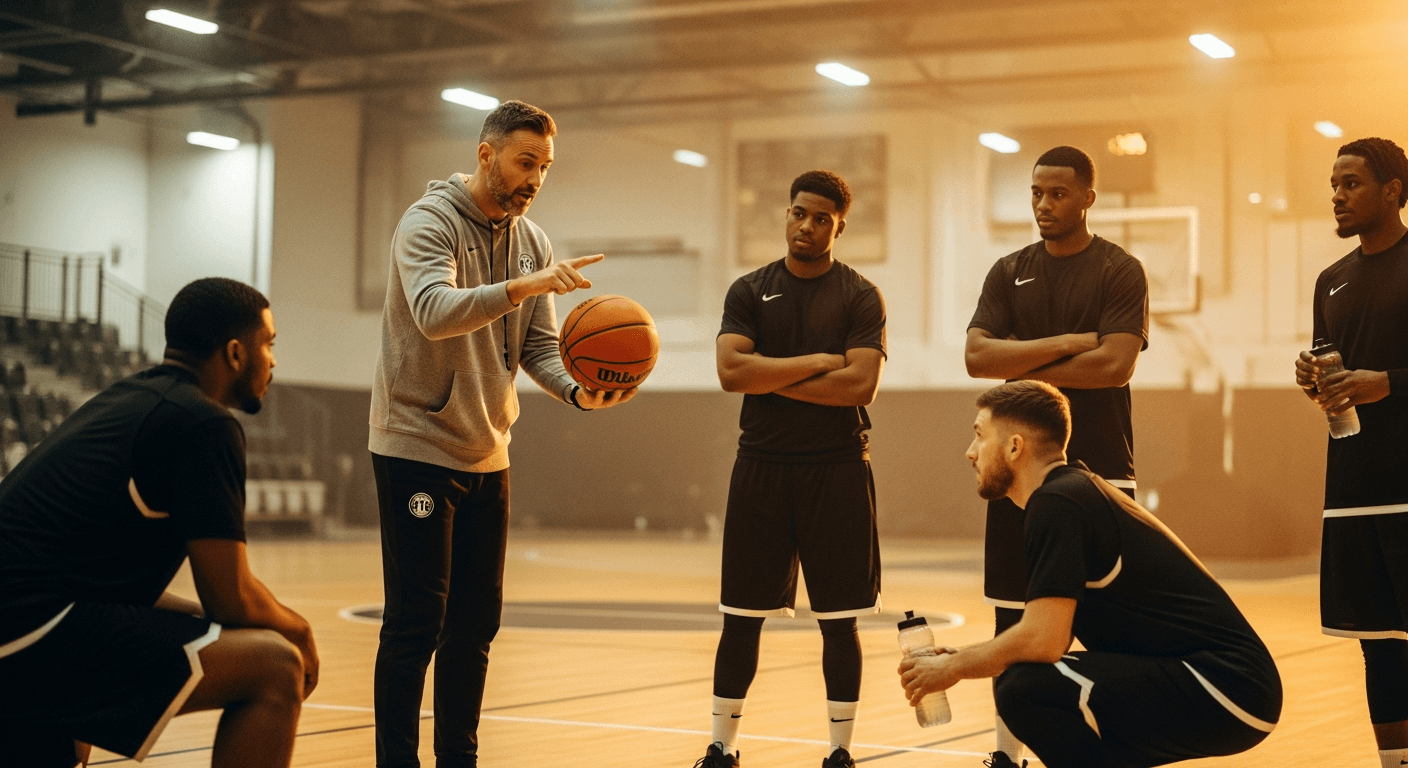
The Core Idea
Basketball, like any sport, fundamentally relies on certain core principles that are crucial for new teams to grasp. These principles are not only specific to basketball but can be adapted and applied to any team sport. For a team new to basketball, the most important things to instill include understanding the fundamentals, emphasizing teamwork, developing strategic thinking, and fostering a growth mindset. The core idea is to create a foundation of skills and mental toughness that will serve athletes in any sporting context.
Why This Wins in Sports
Mastering the basics and cultivating a strategic mindset allows athletes to perform consistently under pressure. These elements are crucial in basketball, where the fast-paced nature of the game demands quick decision-making and seamless execution. By focusing on these aspects, coaches can prepare athletes to adapt and excel in various situations, ultimately leading to improved performance and success in competitive environments.
- Fundamentals: Mastery of basic skills leads to better performance and less reliance on luck.
- Teamwork: Effective collaboration maximizes team potential and creates synergy on the court.
- Strategic Thinking: Understanding when and how to execute plays underpins successful tactics.
- Growth Mindset: Encourages continuous improvement and resilience, essential for long-term success.
The Mechanics
To successfully teach a new team the fundamentals of basketball, coaches must focus on the mechanics of core skills such as dribbling, shooting, passing, defense, and positioning. These skills form the basis of effective gameplay and must be ingrained through repetitive practice and feedback.
- Dribbling: Focus on control, speed, and change of direction.
- Shooting: Emphasize proper form, balance, and follow-through.
- Passing: Teach accuracy, timing, and decision-making.
- Defense: Instill principles of positioning, anticipation, and reaction.
- Positioning: Develop spatial awareness and understanding of roles.
The Decision Rules
Decision-making is critical in basketball. Coaches should guide athletes to make quick, effective decisions using simple if/then rules:
- If the defender is close, then use a crossover dribble to create space.
- If the path to the basket is open, then drive for a layup.
- If a teammate is open, then make a pass.
- If you’re double-teamed, then look for the open teammate.
- If the opponent is in a scoring position, then close out aggressively.
Common Mistakes and Exact Fixes
Here are eight common mistakes and how coaches can address them:
- Mistake: Dribbling with the head down.
- What the coach says: "Eyes up!"
- What the coach changes: Use a dribbling drill where players call out numbers the coach holds up, forcing them to look up.
- Mistake: Poor shooting form.
- What the coach says: "Elbow in, follow through!"
- What the coach changes: Incorporate form shooting drills focusing on wrist snap and elbow alignment.
- Mistake: Sloppy passing.
- What the coach says: "Hit the target!"
- What the coach changes: Drill with targets on the wall or cones to improve accuracy.
- Mistake: Not using the body on defense.
- What the coach says: "Get in their space!"
- What the coach changes: Use partner drills to practice body positioning and pressure.
- Mistake: Poor spacing on offense.
- What the coach says: "Spread out!"
- What the coach changes: Run offensive sets without the ball to emphasize positioning.
- Mistake: Failing to box out on rebounds.
- What the coach says: "Find a body, box out!"
- What the coach changes: Use rebounding drills that reward securing the ball after boxing out.
- Mistake: Rush decisions under pressure.
- What the coach says: "Stay calm, read the play!"
- What the coach changes: Simulate high-pressure situations in practice to improve composure.
- Mistake: Ignoring defensive help.
- What the coach says: "Help, don’t watch!"
- What the coach changes: Implement drills that emphasize rotations and help defense.
Teaching Progression
Effective teaching progression moves from Beginner to Intermediate to Advanced, with specific criteria for advancement.
Beginner
Focus on understanding and executing basic skills. Criteria for moving to the next level include competent dribbling, passing, and shooting form.
Intermediate
Introduce strategic concepts and team play. Athletes should show improved decision-making and understanding of positioning. Criteria for advancement include effective execution of plays and defensive strategies.
Advanced
Refine skills and focus on high-pressure situations. Athletes should demonstrate leadership and strategic adaptability. Criteria for this level include consistent performance under pressure and the ability to adjust tactics in real-time.
Drill Menu
Here are five drills designed to teach key aspects of basketball fundamentals:
-
Dribbling Obstacle Course
- Purpose: Improve control and agility.
- Setup: Cones set up in a zigzag pattern.
- Key Constraint: Dribble only with non-dominant hand.
- Success Metric: Time completion and error count.
- Scale: Add defenders for increased difficulty.
-
Spot Shooting
- Purpose: Develop shooting form and consistency.
- Setup: Mark spots around the key.
- Key Constraint: Must shoot within 3 seconds of receiving the ball.
- Success Metric: Shooting percentage from each spot.
- Scale: Increase distance for more challenge.
-
Pass and Cut Drill
- Purpose: Enhance passing accuracy and movement without the ball.
- Setup: Players in pairs, one passes, the other cuts.
- Key Constraint: Passer must hit a target on the move.
- Success Metric: Successful passes and completed cuts.
- Scale: Add defenders to simulate game conditions.
-
Defensive Closeout Drill
- Purpose: Improve defensive positioning and reaction.
- Setup: Player starts at the key, closes out to a shooter.
- Key Constraint: Must close out in under 2 seconds.
- Success Metric: Effective closeout and hand in the shooter's face.
- Scale: Add multiple shooters for decision-making.
-
Rebounding Battle
- Purpose: Teach boxing out and securing rebounds.
- Setup: Two lines under the basket, coach shoots.
- Key Constraint: Must box out before going for the ball.
- Success Metric: Number of successful rebounds.
- Scale: Add more players for increased competition.
Game Transfer
Measuring improvement in real competition involves observing specific behaviors and tracking stats:
- Dribbling: Count turnovers due to poor control.
- Shooting: Monitor shooting percentage and shot selection.
- Passing: Track assists and turnovers.
- Defense: Evaluate effectiveness of closeouts and help defense.
- Rebounding: Count offensive and defensive rebounds secured.
Coach Cheatsheet
Here are ten shoutable coaching cues to reinforce key concepts:
- "Eyes up, read the court!"
- "Elbow in, follow through!"
- "Hit the target, make the pass!"
- "Stay in their space, body up!"
- "Spread out, use the space!"
- "Find a body, box out!"
- "Stay calm, read the play!"
- "Help, don’t watch!"
- "Drive when it’s open!"
- "Communicate, talk it out!"
By focusing on these essential elements, coaches can effectively guide a new basketball team in developing the fundamental skills and strategic mindset necessary for success, both in basketball and any other team sport.
Tags
Sources & References
- Coaches Playbook: Advice for New Basketball Coaches - Tips
1. Have a Practice Plan. Being organized as a coach is imperative to your team's success. · 2. Teach to Play. A lot of new coaches make the mistake of spending a
- Your Ultimate Guide to Coaching Youth Basketball | gearUP
1. Establish Your Coaching Philosophy · 2. Focus on the Fundamentals · 3. Teach Offensive and Defensive Strategies · 4. Mentor and Motivate Athletes · 5. Keep
- Developing effective basketball coaching strategies - Facebook
Here are some tips to help develop effective strategies: Study the Game: Continuously study basketball strategies, both historical and
- 6 Youth Basketball Coaching Tips for Motivation & Connection
Tip #1: Be Curious to Build Player-Coach Connection · Ask open-ended questions ; Tip #3: Develop a Growth Mindset for Lasting Player Development.
- USA Basketball Coaching Guidebook Player Development ...
“The emphasis should be on proper movement, mechanics and repetitiveness, doing some of the same things over and over until you're well-versed
Related Articles
Take Your Coaching to the Next Level
Practice Plan helps coaches create, organize, and share professional practice plans — all in one place, built for coaches.
Free to start • Available on iOS & Web
For Leagues & Associations
Give your coaches a free tool — at no cost to you.
Partner with Practice Plan and your coaches get a 14-day free trial. You just forward one email. No budget, no contracts.
Get Coaching Articles in Your Inbox
Subscribe to receive new articles. Choose your sports to get personalized content.
No spam, unsubscribe anytime.