
Introduction: Why Age-Appropriate Skill Development Matters in Football
Coaching football is as much an art as it is a science, especially when it comes to developing young athletes. **Age-appropriate skill development** is a crucial aspect of coaching that ensures players not only learn the game effectively but also enjoy the process. Young athletes have different physical, cognitive, and emotional needs at each stage of their development, and recognizing these differences is key to successful coaching. This article will delve into strategies for coaches to foster skill development at various age levels, ensuring a holistic and enjoyable learning experience for young footballers.Understanding Developmental Stages in Football Coaching
Every age group has unique characteristics that influence how they learn and develop. Understanding these characteristics allows coaches to tailor their training sessions accordingly. Here's a breakdown of key age groups and their developmental needs:Ages 5–7: Introduction and Fun
At this stage, the primary focus is on **introducing basic motor skills** and the fundamental rules of the game. Young players are just beginning to develop coordination and balance, so activities should be designed to enhance these skills in a fun and engaging way. - **Focus Areas**: - Basic motor skills like running, jumping, and throwing - Introduction to simple rules of football - Encouraging teamwork and social interaction - **Activities**: - **Flag football**: A safe and enjoyable way to introduce the game without the risk of injury. - **Station-based drills**: Set up different stations focusing on various skills like passing, dribbling, and shooting. - **Fun games**: Incorporate games that emphasize basic skills, such as tag or relay races, to maintain high energy and enjoyment.Ages 8–10: Building Basic Skills
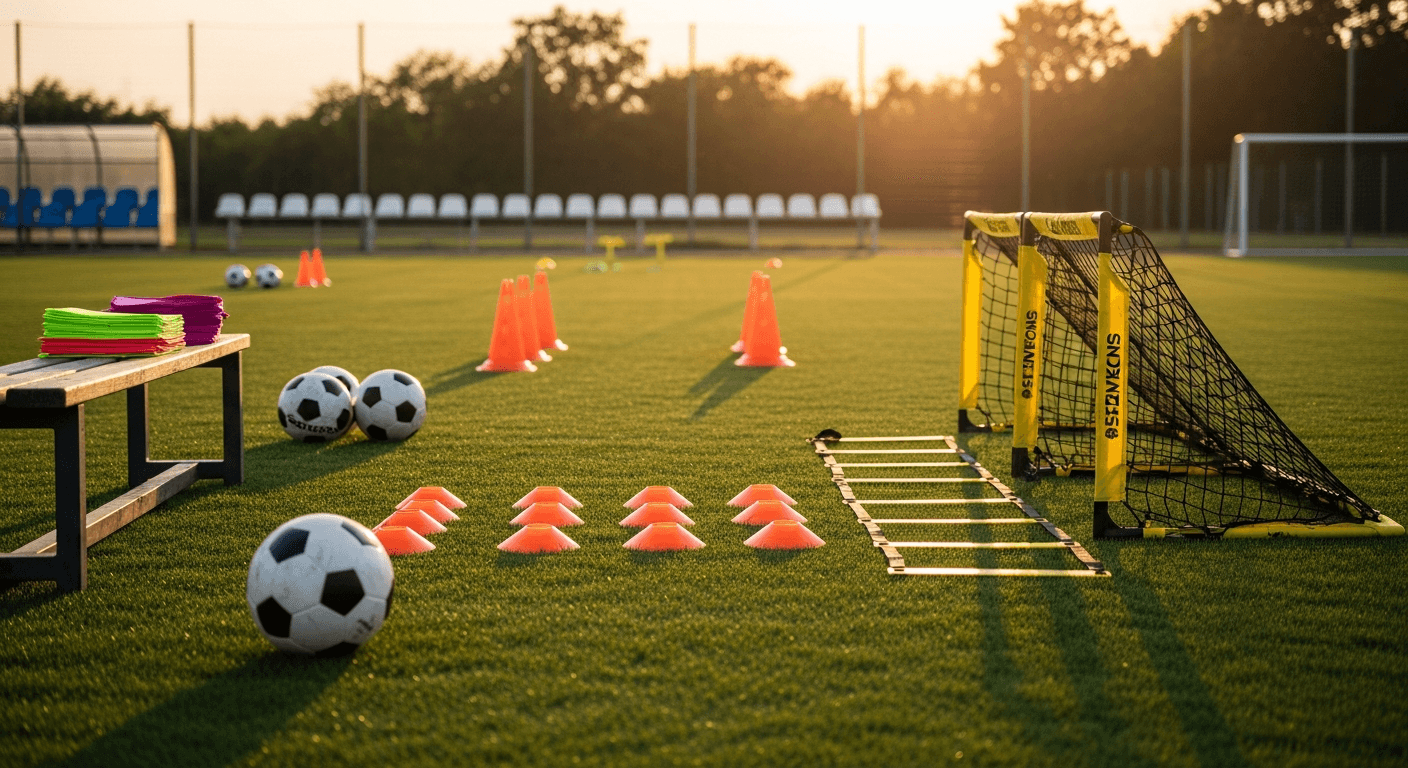
Children at this age are ready to **develop more specific football skills** and begin understanding game tactics. Their cognitive abilities are improving, allowing them to follow more complex instructions. - **Focus Areas**: - Developing footwork and ball control - Understanding basic game strategies - Enhancing agility and coordination - **Activities**: - **Dribbling drills**: Use cones to create obstacle courses that challenge players' control and agility. - **Small-sided games**: Encourage players to apply their skills in a game setting, focusing on teamwork and strategy. - **Skill challenges**: Set individual or team challenges that motivate players to improve their technical abilities.Ages 11–13: Refining Techniques and Introducing Competition
As players enter their pre-teen years, they become more competitive and are ready to refine their skills. This is the age where **technical and tactical training can be more emphasized**. - **Focus Areas**: - Refining technical skills like passing, shooting, and defending - Introducing more complex tactical concepts - Developing physical fitness and endurance - **Activities**: - **Technical drills**: Focus on drills that enhance precision and consistency in skills like passing accuracy and shooting technique. - **Tactical sessions**: Teach players about positioning, formations, and reading the game. - **Conditioning games**: Incorporate fitness elements into drills to build stamina and strength.Ages 14–16: Advanced Skill Development and Specialization
Teenage players start to specialize in specific positions and require **advanced skill development** tailored to their roles. They are also more capable of handling intensive physical training. - **Focus Areas**: - Advanced technical skills specific to positions (e.g., goalkeeping, forward play) - In-depth tactical understanding - Strength and conditioning - **Activities**: - **Position-specific training**: Customize drills that focus on the skills needed for each position on the field. - **Advanced tactical training**: Work on complex game strategies and situational play. - **Strength training**: Introduce weight training and plyometrics to enhance physical capabilities.Best Practices for Implementing Age-Appropriate Training
Implementing age-appropriate training methods requires a strategic approach. Here are some best practices for coaches to consider: - **Use Positive Reinforcement**: Encourage players by highlighting their strengths and improvements, which fosters a positive learning environment. - **Incorporate Variety**: Use a mix of drills, games, and activities to keep sessions engaging and cater to different learning styles. - **Set Clear Objectives**: Define what you want to achieve with each session and communicate these goals to your players. - **Monitor Progress**: Keep track of each player’s development and adjust training plans as needed to address individual needs. - **Foster a Fun Environment**: Ensure that players enjoy their time on the field, as enjoyment is a key factor in long-term participation and development.Conclusion: Actionable Takeaways for Coaches
Coaching young football players is a rewarding journey that requires patience, understanding, and adaptability. By focusing on **age-appropriate skill development**, coaches can create a positive and effective training environment that nurtures both the skills and the love for the game in young athletes. - **Assess and Adapt**: Regularly evaluate your players’ progress and adapt your coaching methods to meet their evolving needs. - **Engage and Motivate**: Keep training sessions fun and motivating, ensuring that players are eager to participate and learn. - **Educate and Empower**: Educate players about the importance of skills and tactics, empowering them to think critically about their game. By implementing these strategies, coaches can significantly impact their players' growth, not just as athletes but as individuals who appreciate the values that football instills.Tags
Sources & References
- Age Appropriate Strategies for Coaching Youth Sports
Sep 1, 2020 — Effective coaching uses age-appropriate feedback, emphasizing corrections, encouragement, and clear instruction.
- Youth Development: The Art of Age-Appropriate Training | Sportplan
YOUR SESSION IS STARTING SOON... Join the growing community of football coaches plus 500+ drills and pro tools to make coaching easy. LET'S DO IT ### Coaching inspiration in your inbox Register for
- Youth Football Coaching: Building Championship Programs from Day 1
## Age-Appropriate Coaching Strategies Ages 5–7: Introduction and Fun Focus: Basic motor skills, rules of the game, and teamwork Activities: Flag football, station-based drills, fun games with a f
- 10 Top Football Coach Drills for 2026 Success | Vanta Sports
The goal is not to turn every coach into an analyst. The goal is to make good habits easier to repeat. Short coaching cues. Clear progressions. Age-appropriate challenges. A simple record of what work
- F-Youth Football: Age-appropriate training, development & coaching
CoachOS CoachOS ← Back to Wiki overview Knowledge database # F youth in football: age-appropriate training, development & coaching The F youth (U8/U9) is the golden age of versatility and Ball co
Related Articles
Take Your Coaching to the Next Level
Practice Plan helps coaches create, organize, and share professional practice plans — all in one place, built for coaches.
Free to start • Available on iOS & Web
For Leagues & Associations
Give your coaches a free tool — at no cost to you.
Partner with Practice Plan and your coaches get a 14-day free trial. You just forward one email. No budget, no contracts.
Get Coaching Articles in Your Inbox
Subscribe to receive new articles. Choose your sports to get personalized content.
No spam, unsubscribe anytime.